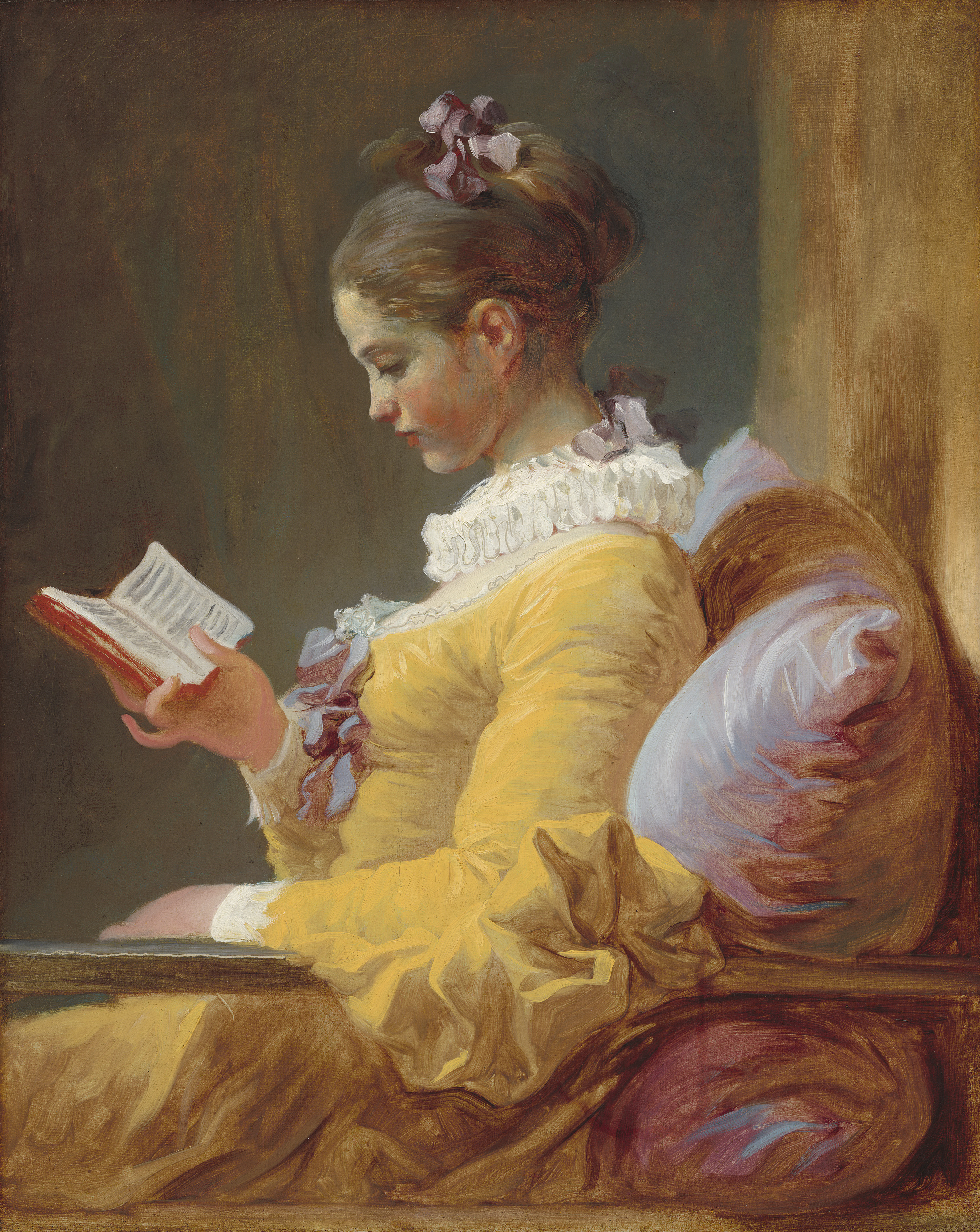
This painting is a tender and intimate portrayal of a young woman absorbed in a book, rendered with Fragonard's characteristic light touch and vibrant brushwork. It eschews the grand narratives or mythological themes often associated with Rococo art, opting instead for a quiet domestic scene that celebrates the simple pleasure of reading. The subject's identity remains unknown, adding to the painting's universal appeal and timeless quality, inviting viewers to share in her moment of tranquil introspection. Its informal composition and warm palette contribute to its reputation as one of Fragonard's most beloved and iconic works.
About the Artist
Jean-Honoré Fragonard (1732–1800) was a prominent French painter whose late Rococo style was characterized by exuberance, spontaneity, and a mastery of color and light. Trained by Chardin and Boucher, Fragonard developed a distinctive fluid brushwork and a penchant for lighthearted, often overtly sensual, genre scenes, portraits, and landscapes. Despite his later fall from favor during the French Revolution, his work epitomizes the elegance and hedonism of the ancien régime, reflecting a world of leisure and romantic intrigue with unmatched charm and technical brilliance.
Dominant Color Palette
#E0C78E
Golden Ocher
The vibrant, luminous yellow of the girl's dress, catching the light and dominating the composition.
#F0EFE7
Pearl White
Used for the crisp white collar and the pages of the book, providing bright contrasts and focal points.
#AA8B78
Warm Sienna
The soft, warm tones of the girl's skin and the wooden chair, adding a sense of naturalism and warmth.
#6E6C63
Muted Olive-Grey
The rich, subtle background creating depth and allowing the figure to stand out without distraction.
#C85F50
Rose Madder
Delicate touches in the girl's lips and cheeks, imparting a lifelike blush and vitality.
#2D2E2B
Velvet Black
The dark ribbon in her hair and deep shadows, providing strong accents and definition.
Technique: Alla Prima & Chiaroscuro
"Alla Prima," or "wet-on-wet" painting, involves applying paint in a single session before it dries, lending spontaneity. "Chiaroscuro" uses strong contrasts between light and dark, usually bold contrasts affecting a whole composition.
Fragonard masterfully employs a rapid, fluid "alla prima" application in "A Young Girl Reading," especially evident in the lively brushwork of her dress and the background, giving the painting a sense of immediacy and freshness. The technique allows for seamless blending and soft transitions. Chiaroscuro is subtly utilized to create depth and focus; while not dramatically dark, the background's muted tones and the shadow cast by the book effectively draw the viewer's eye to the illuminated figure and her absorbing activity.
Medium & Materials: Oil on Canvas
Oil paint, composed of pigments suspended in a drying oil binder, is known for its rich colors, blendability, and long drying time, allowing for extensive manipulation.
The painting is executed in oil on canvas, a versatile medium perfectly suited to Fragonard's expressive and painterly style. The slow drying time of oil allowed him to achieve the delicate gradations of tone and the soft, luminous quality characteristic of Rococo art. He likely used relatively fluid paint, possibly thinned with turpentine or oil mediums, to create the effortless brushstrokes and transparent glazes that give the girl's dress and the surrounding atmosphere their shimmering quality. The pigments, likely earth tones, lead white, and madder lake, were applied with a light hand, often with minimal impasto, creating a smooth yet lively surface.